A fire safety checklist for renters
Renting changes who pays and who is responsible, but not who dies. This is the version of the checklist for people who cannot rewire anything, cannot drill the walls, and may be sharing a stairwell with thirty other households.
Rules for rented housing are set state by state and often city by city, so nothing here is a statement of your local law. The pattern across most of the United States is consistent enough to plan around: the landlord has to supply working alarms and keep the installed systems in order, and the tenant has to keep them working during the tenancy and report failures.
Who is responsible for what
| Item | Usually the landlord | Usually the tenant |
|---|---|---|
| Alarms present and working at move in | Yes, in most states | Check and confirm it in writing |
| Replacing a failed alarm | Yes, once reported | Report it, in writing, promptly |
| Replaceable batteries during the tenancy | Sometimes | Commonly yes |
| Alarms reaching ten years old mid tenancy | Yes | Point out the date on the back |
| Furnace, water heater and chimney servicing | Yes | Report smells, soot, pilot lights going out |
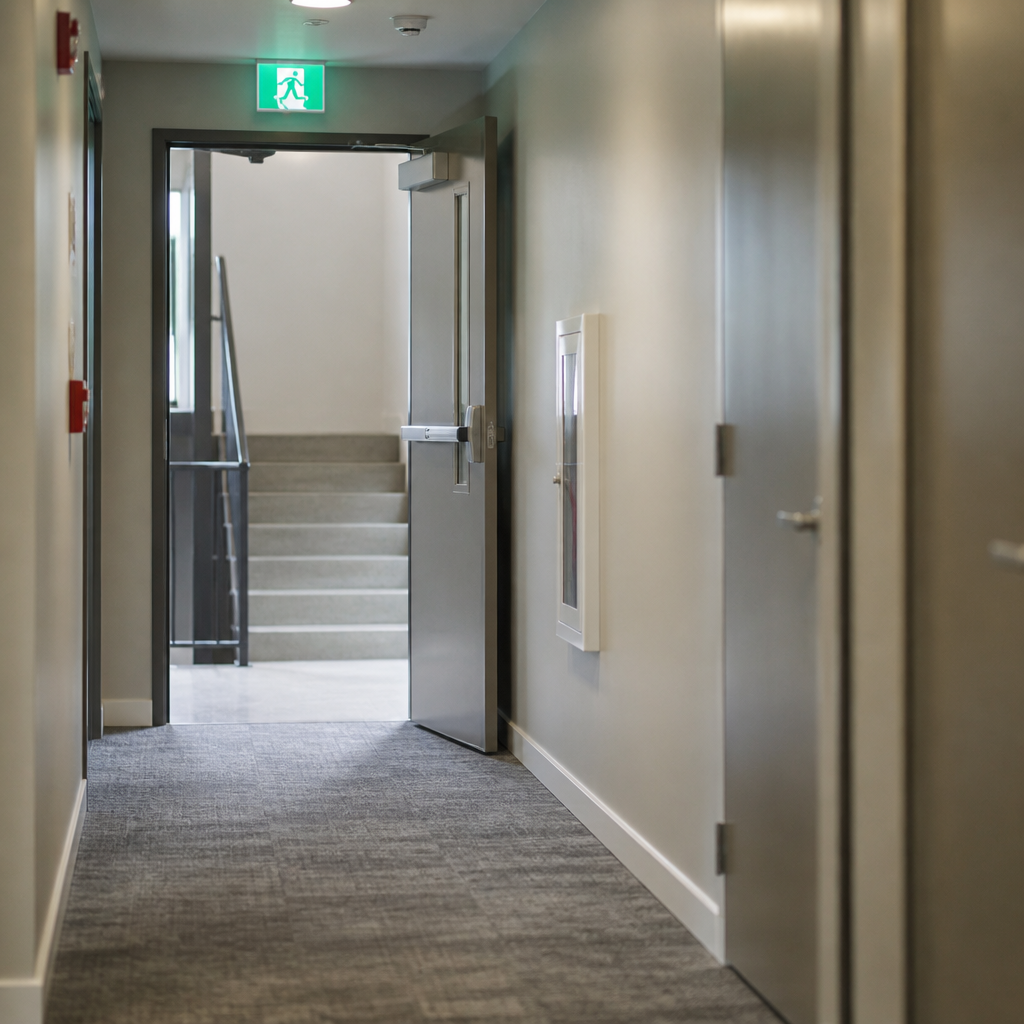
| Communal stairwells, fire doors and extinguishers | Yes | Report propped doors and blocked exits |
| Contents insurance | No, the landlord policy covers the building only | Yes, and it is inexpensive |
The move in inspection, in writing
Do this in the first week, before anything is anybody's fault, and keep the record.
- Test every alarm and note the result room by room.
- Twist each alarm off and photograph the date of manufacture on the back.
- Count the alarms against the standard: one in each bedroom, one outside each sleeping area, one on each level.
- Check there is a carbon monoxide alarm if there is any fuel burning appliance, fireplace or attached garage.
- Open every window on an escape route, all the way, and note any that stick or are painted shut.
- Photograph any security bars and confirm the interior release works.
- Email the landlord or agent a dated summary with the photographs, and keep the sent copy. A polite factual email is a legal record; a phone call is not.
What you can fit yourself
Everything on this list is removable, leaves no damage, and travels with you to the next place.
- Extra sealed ten year smoke alarms, in bedrooms the landlord has not covered, using the adhesive mounting most of them now include.
- A plug in carbon monoxide alarm, which needs no fixing at all.
- A fire blanket hung by the kitchen door.
- A small A:B:C extinguisher on a floor stand or a shelf rather than a wall bracket.
- A portable escape ladder that hooks over the sill, which is exactly the point for a tenant.
- Surge protected power strips with a resettable breaker, replacing daisy chained extension leads.
- A torch beside each bed.
None of that removes the landlord's obligation, and adding your own alarm does not mean you stop reporting a failed one.
Removing a battery to stop nuisance alarms is a lease violation almost everywhere and an offence in some states, and it is the single most common finding in fatal rented housing fires. If an alarm keeps sounding while you cook, report it as a placement problem and ask for a photoelectric unit or a hush button. That is a reasonable request with a reasonable answer.
How apartment buildings expect you to behave
Buildings differ, and the difference is posted in the lobby and on each floor. Read it before you need it.
- Full evacuation buildings, which is most low rise housing: alarm sounds, everybody leaves by the stairs, meet at the assembly point.
- Stay put buildings, common in fire resistive high rise construction: leave if the fire is in your unit or your floor, or if you are told to; otherwise stay in your unit with the door closed, because the corridors and stairs are where the smoke goes.
Whichever kind you live in, the same habits apply.
- Know two stairwells, not one, and walk both of them once.
- Count the doors between your unit and each stairwell, so you can find it by touch in smoke.
- Never take a lift.
- Never prop a fire door, and report ones that are propped or that no longer self close.
- Keep the corridor outside your door clear. Prams, bikes and boxes in a corridor are fuel and an obstacle at the same time.
- Know where the assembly point is and go there, so that the building manager can account for you.
- If you cannot leave: close the door, seal the gaps, go to a window, call 911 and give your unit number.
The fires that start in rented homes
- Overloaded outlets and daisy chained extension leads, especially in older buildings with too few sockets. One power strip per outlet, plugged straight into the wall.
- Portable heaters, where the heating is inadequate. Three feet clear on every side, plugged directly into the wall, never left running overnight or while out, and never in a room where a child sleeps alone.
- Candles, especially in bedrooms. Battery candles have no downside.
- Cooking left unattended, the leading cause of home fires in the United States by a wide margin.
- Smoking indoors, which national analyses have long identified as the leading cause of home fire deaths. If anyone smokes, outside only, and into water rather than a bin.
- Lithium ion batteries charging, particularly e-bikes and scooters. Charge them while awake, not overnight, never in the only exit route, on the manufacturer's own charger, and stop using any battery that has been damaged, dropped or has begun to swell.
Renters insurance, briefly
The landlord's policy covers the building. It covers nothing of yours. Renters insurance covers your belongings, usually covers temporary accommodation if the building becomes uninhabitable, and usually includes liability if a fire that starts in your unit damages someone else's. It is one of the cheapest insurance products sold, and the moment to find out you do not have it is not the morning after.
The one page version
- Every alarm tested this month, and the dates on the back photographed.
- An alarm in every bedroom, outside each sleeping area, on every level.
- A carbon monoxide alarm if there is anything that burns fuel.
- Two ways out of every room, and the windows actually open.
- Two stairwells known, doors counted, lifts ruled out.
- Nothing stored in the corridor, no fire door propped.
- One power strip per outlet, heaters three feet clear, no overnight battery charging.
- A meeting point outside that everyone in the household can name.
- Contents insurance in place.
- Every request to the landlord sent in writing and kept.